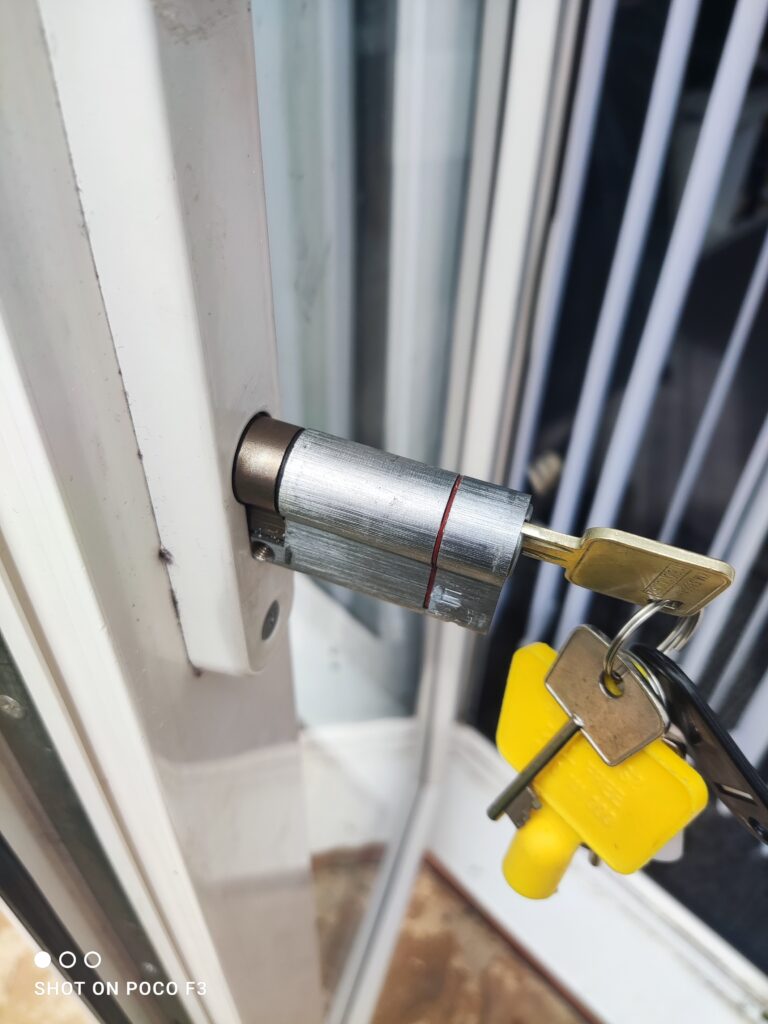
What Parts of a Locking System Can Be Upgraded?
Upgrading door security rarely requires fitting an entirely new door. In many cases, only specific parts of the locking arrangement need to be updated:
- The lock cylinder: On compatible uPVC and composite doors, an existing euro cylinder can sometimes be replaced with a higher-security alternative.
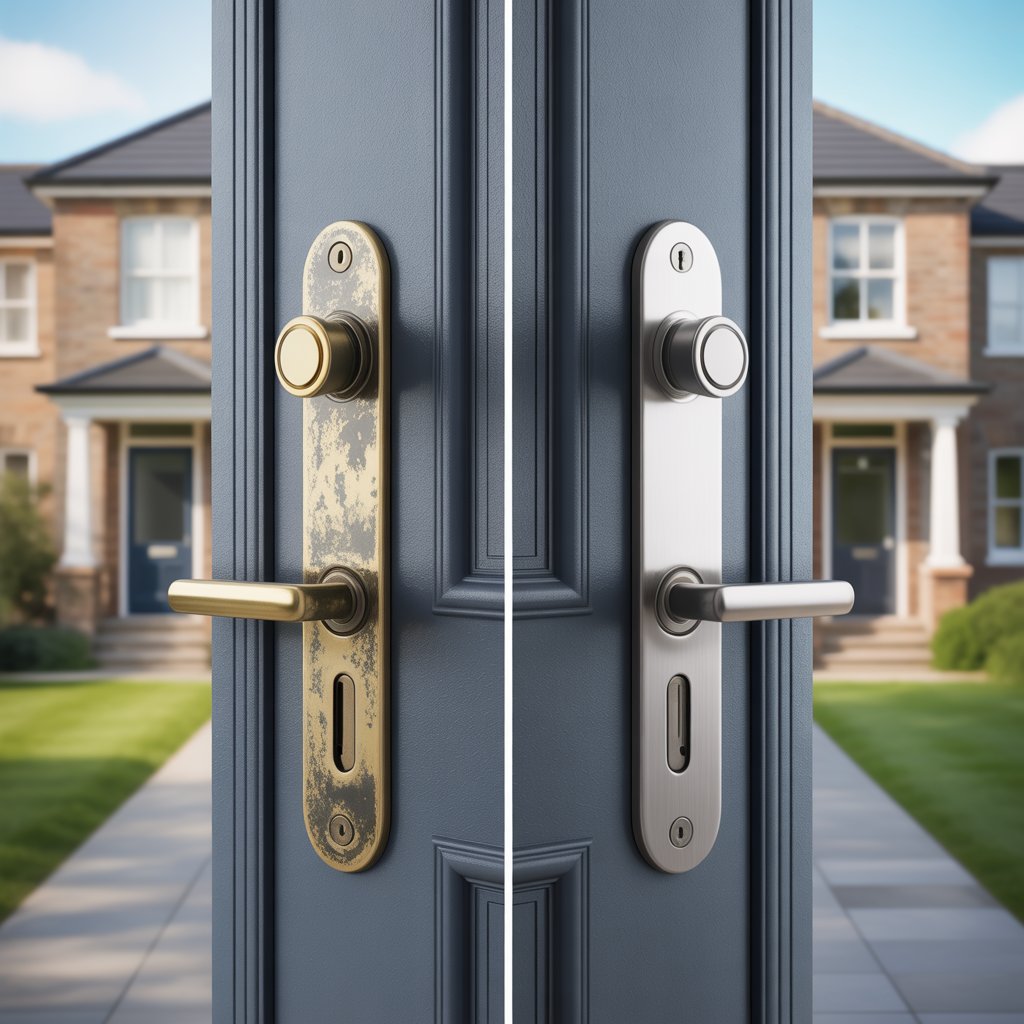
- The mortice lock: On external timber doors, older or basic mortice locks can sometimes be replaced with models tested to recognised security standards, where compatible with the door.
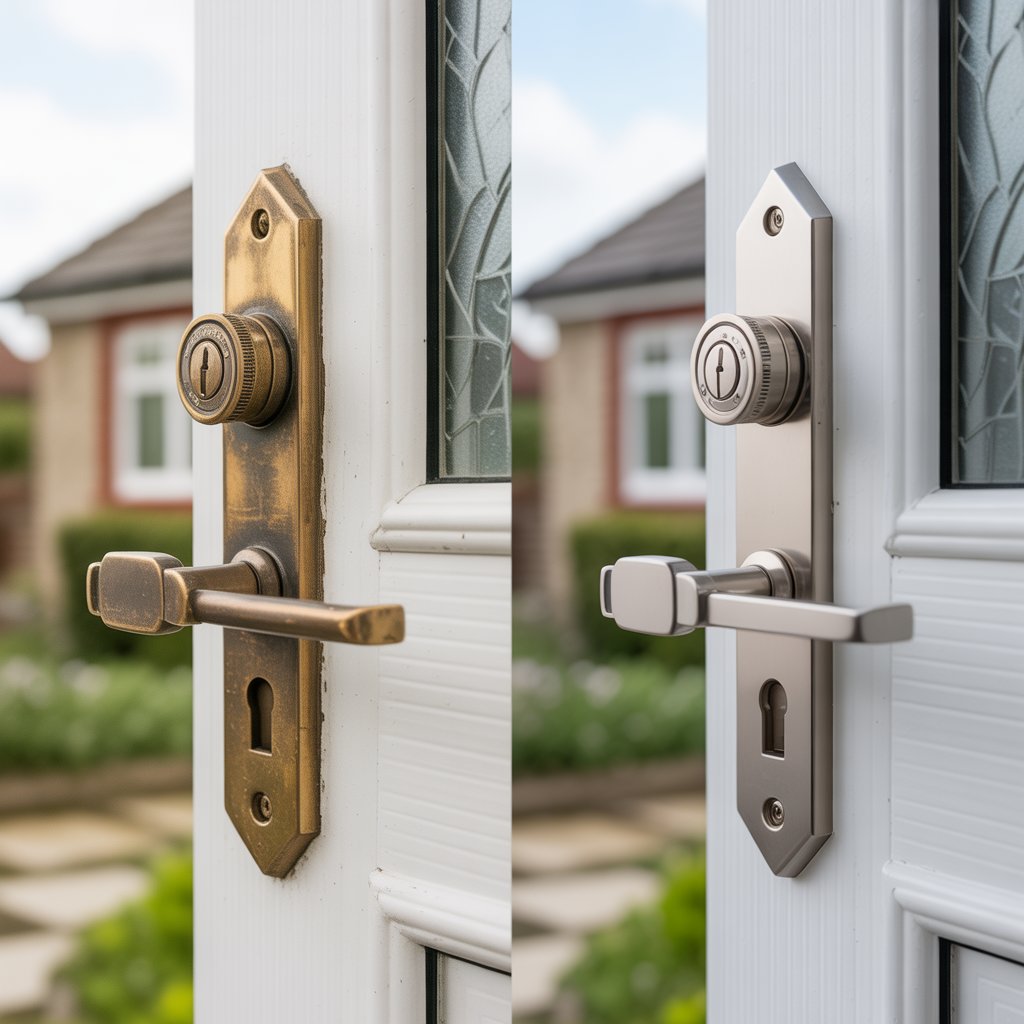
- Door furniture: Security handles or compatible protective hardware can strengthen the area around the existing locking components.
- Multi-point locking components: Where the existing system is compatible, selected components may be replaced or improved without changing the entire door.
- Key-control hardware: Restricted key systems can help control who is authorised to obtain additional copies.
How Do You Choose the Right Lock Upgrade?
Choosing the right upgrade depends primarily on the door construction—whether timber, uPVC, or composite—and the mechanism already in place. Mortice locks are commonly used on timber doors, while many composite and uPVC doors use multi-point locking systems operated through a euro cylinder or another compatible cylinder arrangement.
Door alignment, frame condition, and precise hardware dimensions also matter. A higher-rated security product is not automatically the right choice if it does not fit the door leaf cleanly or work in harmony with the existing multi-point mechanism. Checking individual insurance policy wording is equally important, as requirements differ across insurers.
BS 3621 and TS 007: Which Standard Applies?
UK lock standards help property owners compare security levels, but each standard applies to different types of hardware:
- BS 3621: A British Standard covering thief-resistant mechanically operated locks for use on doors, commonly associated with external timber doors.
- TS 007: A technical specification that uses star ratings to assess the security performance of certain cylinders and protective door hardware.
Neither standard is a universal requirement for every property; insurance criteria vary between policies, so you should check your specific policy documents rather than assuming one standard is mandatory.
Should You Repair, Replace or Upgrade a Lock?
Understanding the distinction between these three options ensures you select the most sensible solution for your property:
- Lock Repair: Appropriate when the existing hardware remains suitable but has a fault that can reasonably be corrected.
- Lock Replacement: Appropriate when the existing lock is physically damaged, significantly worn or unreliable and repair is no longer suitable. The replacement should be compatible with the existing door and locking arrangement.
- Lock Upgrade: Chosen when the existing lock works properly but you want to improve physical resistance, achieve better key control, or meet updated security requirements. Learn more about euro cylinder locks and their role in compatible door security.
An upgrade does not automatically require replacing the entire locking mechanism if a compatible component can provide the improvement required.
Lock Upgrades for Homes and Businesses in Andover
Security requirements naturally differ between residential properties and commercial premises across Andover and Hampshire. Homeowners typically focus on securing front entrances, timber side doors, and patio doors. For businesses, the priority may be controlling access between employees, maintaining suitable security at external entrances, or updating hardware when premises change hands.
FAQS
Questions & Answers About Lock Upgrades
Getting Your Door Locks Assessed in Andover
The overall cost of an upgrade depends on the existing hardware, door type, component compatibility, and selected security level; any replacement parts and necessary work should be explained before installation. If you are considering a lock upgrade in Andover, Pip Lockout can assess the existing door and explain which options are compatible with the current locking arrangement. Contact Phillip Aylen on 07391 815690 to discuss your requirements.
For additional information about our local locksmith services, you can also view our Checkatrade profile.